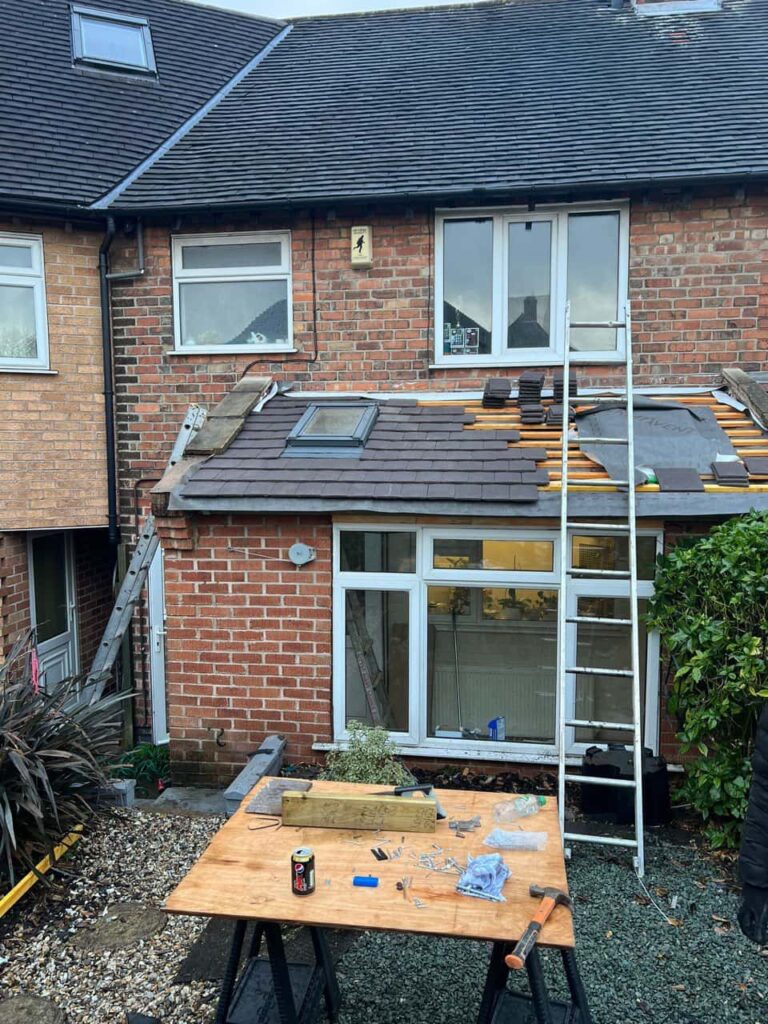
A roof leak that returns after previous attention can be particularly frustrating. In some cases, the original repair may still be sound and water may actually be entering from another nearby defect. In others, recurring water ingress can indicate that deterioration extends beyond one damaged tile or isolated section of flashing.
The important point is that the place where water becomes visible inside a property is not necessarily where it entered the roof. Moisture can travel along underlay, timbers and other components before appearing on a ceiling or wall. This can make recurring leaks difficult to diagnose without examining the wider roofing system.
For homeowners in Newark on Trent, Nottingham, Newark on Trent Roofing Repairs provides professional roof inspections and repairs focused on identifying the underlying source of water ingress rather than simply treating the most obvious symptom.
Why Can the Same Roof Leak Keep Returning?
Recurring leaks can develop for several reasons. Sometimes the original defect has deteriorated further, but there may also be several weaknesses contributing to the same internal damp area.
Common possibilities include:
- Slipped, cracked or damaged tiles
- Deteriorating flashing
- Problems around roof valleys
- Ageing or damaged underlay
- Defects around chimneys or roof junctions
- Loose ridge or verge materials
- Water entering higher up the roof
- More than one defect affecting the same area
This is why simply concentrating on the point directly above an internal water stain can sometimes fail to identify the real source.
Water Can Travel Before You See It
One of the most important things to understand about roof leaks is that water does not always travel vertically downwards.
After entering beneath the external covering, rainwater may follow the roof slope, move along a timber or travel across underlay before eventually finding a route into the property.
For example, a damp patch in one room could potentially originate from a defect further up the roof.
Professional leak detection therefore involves considering how water is likely to move through the roofing system rather than assuming the internal symptom identifies the external problem.
Could Several Damaged Tiles Cause Recurring Leaks?
Yes. One damaged tile may be easy to identify, but an ageing roof can sometimes contain several tiles that are cracked, loose or beginning to deteriorate.
Replacing the most obvious damaged tile may resolve one entry point while another weakness remains nearby.
This does not necessarily mean the whole roof needs replacing. It does, however, demonstrate why surrounding materials should be checked during repair work.
If deterioration is widespread rather than isolated, the appropriate solution may need to extend beyond replacing individual tiles.
Flashing Can Be a Source of Persistent Water Ingress
Flashing protects vulnerable locations where roofing materials meet other surfaces or structures.
These areas require particularly careful detailing because they frequently experience concentrated water flow.
Deterioration may occur around:
Chimneys
Flashing around the chimney needs to maintain a weather-resistant junction between the masonry and roof covering.
Abutments
Where the roof meets a wall or another vertical surface, defective detailing can create an entry point for water.
Roof Features
Junctions around other roof features can also become vulnerable as materials age or move.
Where a recurring leak is close to one of these areas, the complete junction should be assessed rather than repeatedly sealing whichever gap appears most obvious.
Valleys Deserve Particular Attention
Roof valleys carry water from adjoining roof slopes and can therefore handle significant quantities of rainfall.
A relatively small defect within a valley can result in noticeable water ingress because so much water passes through the area.
Debris, deteriorating materials or problems with surrounding tiles can all affect valley performance.
Where internal damp repeatedly appears beneath or close to a valley, professional inspection is particularly important.
What If the Problem Is Beneath the Tiles?
The visible roof covering is only one part of the complete roofing system.
Underneath the tiles or slates are components that also contribute to weather protection and structural support. If these have deteriorated, replacing individual surface materials may not completely resolve the problem.
Possible concerns can include:
- Damaged or ageing underlay
- Deteriorating battens
- Moisture affecting concealed areas
- Previous repairs that have not addressed underlying deterioration
Determining the condition beneath the covering can be essential when leaks continue despite previous surface repairs.
Recurring Leaks Can Indicate General Roof Ageing
Roofs naturally deteriorate as they remain exposed to changing weather conditions over many years.
The significance of a recurring leak depends partly on what else is happening across the roof.
If the covering is generally sound and the problem originates from one difficult-to-identify defect, a targeted repair may still provide an effective solution.
If leaks are developing alongside widespread cracked tiles, repeated slippage, deteriorating junctions and numerous previous repairs, the pattern can suggest broader ageing.
In these circumstances, the condition of the entire roof should be considered.
Previous Repairs Can Provide Useful Clues
A history of repeated repair work can help reveal how a roof is deteriorating.
One isolated repair followed by years of trouble-free performance is very different from repairs being required regularly across several sections.
If new leaks repeatedly appear near older repaired areas, it may be worth examining whether surrounding original materials are now beginning to deteriorate.
The objective should be to understand the pattern rather than continually responding to each new symptom independently.
Does a Recurring Leak Mean You Need a New Roof?
Not automatically.
Many persistent leaks can still be resolved through careful investigation and appropriate repairs. A difficult-to-trace leak does not by itself mean that complete roof replacement is necessary.
More extensive roofing work becomes worth considering when recurring water ingress forms part of a wider pattern of deterioration.
Factors that may influence the decision include:
The Extent of Deterioration
Are problems confined to one area or occurring throughout the roof?
The Condition of the Covering
Are most tiles or slates still serviceable, or are defects becoming widespread?
The Underlying Components
Are underlay, battens and other concealed elements continuing to perform correctly?
The Frequency of Repairs
Is the roof generally reliable, or does it require attention increasingly often?
A professional assessment can distinguish between a repairable leak and a roofing system requiring more comprehensive attention.
Why Repeated Temporary Fixes Can Miss the Real Problem
A recurring leak should ideally prompt investigation rather than another attempt to cover the visible defect.
Applying a temporary treatment to an assumed entry point may appear successful during light rainfall, only for water to return during prolonged or wind-driven rain.
A better approach is to identify the route the water is taking and inspect all relevant roofing components.
This can involve examining the roof covering, flashing, valleys, junctions and surrounding areas before deciding what repair is required.
Why Professional Diagnosis Matters
Roof leak diagnosis requires an understanding of how the complete roof manages water.
At Newark on Trent Roofing Repairs, we approach recurring leaks by considering both the immediate problem and the wider condition of the roofing system. Establishing why water is entering allows the repair to target the cause rather than simply the internal location where damp has appeared.
This approach is particularly valuable where previous work has not permanently resolved the issue.
When Should a Recurring Leak Be Investigated?
It is sensible to arrange professional attention when:
- A leak returns after previous repairs
- Damp appears after particular types of rainfall
- Water staining becomes larger
- Several internal areas are affected
- Tiles are repeatedly slipping or breaking
- The roof has numerous previous repairs
- Water ingress appears without an obvious external defect
- Other sections of the roof are showing deterioration
Early investigation can help prevent continued moisture exposure while the underlying defect remains unresolved.
Repairs or a New Roof: Getting the Decision Right
The appropriate solution should always reflect the actual condition of the roof.
Where the problem is confined to a particular tile, flashing detail, valley or junction, professional repairs may restore reliable weather protection without unnecessary work elsewhere.
Where investigation identifies widespread deterioration across the roof covering and underlying components, a new roof may offer a more complete solution.
The important part is reaching that decision through proper assessment rather than assuming that every leak requires either a minor repair or complete replacement.
Conclusion
A recurring roof leak can be a sign of a wider roofing problem, but it does not automatically mean that the entire roof has failed. Water can travel considerable distances beneath roofing materials, multiple defects can contribute to the same damp area, and deterioration may be hidden beneath tiles or around vulnerable junctions.
The best approach is to establish why the leak is returning and assess whether the problem remains localised or forms part of broader roof deterioration. Once the underlying cause is understood, an appropriate repair or more comprehensive roofing solution can be recommended.
For homeowners in Newark on Trent, Nottingham, Newark on Trent Roofing Repairs provides professional roof repairs, inspections and new roofing solutions focused on reliable long-term performance. If a roof leak keeps returning, contact our team to arrange an assessment and determine what is really causing the problem.
Call us on: 01636 556 194
Click here to find out more about Newark on Trent Roofing Repairs
Click here to complete our contact form and see how we can help with your roofing needs.